
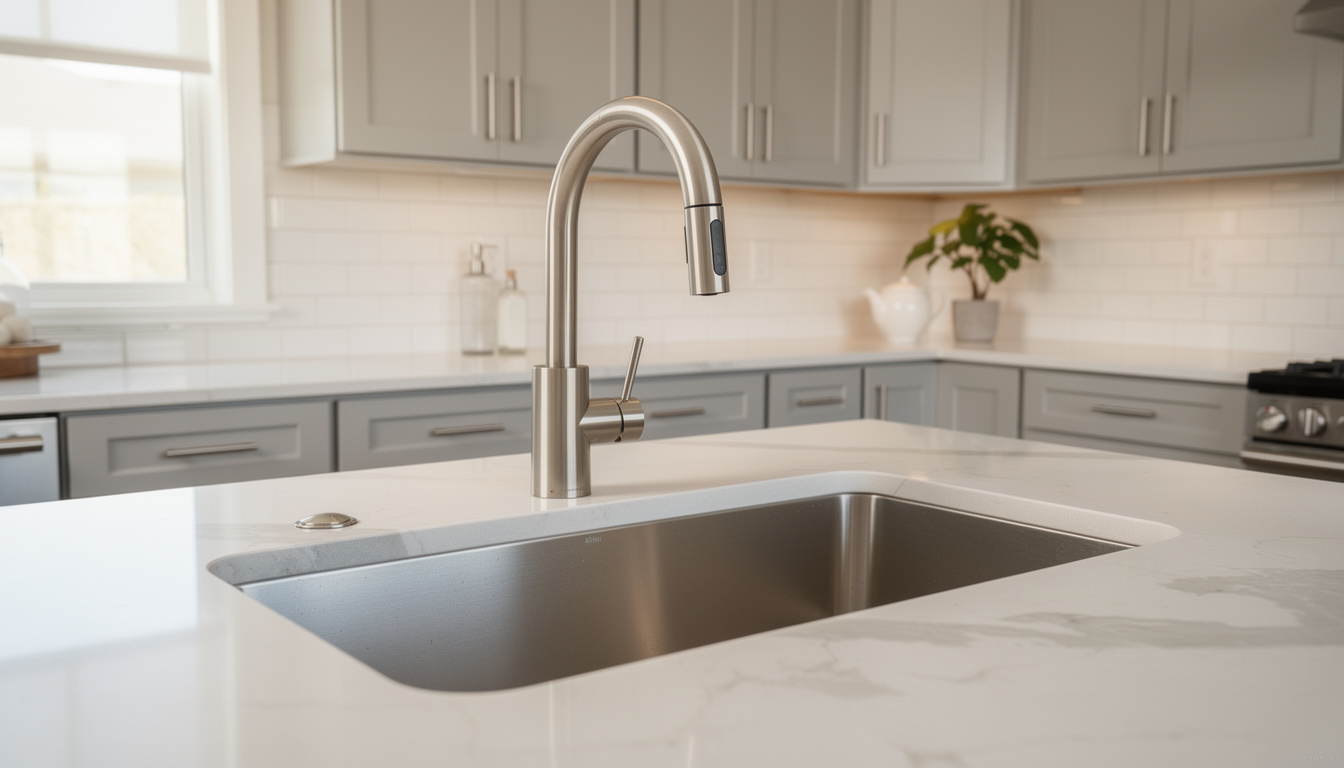
How to Choose and Install a Kitchen Faucet for Limited Mobility
When a family member faces mobility challenges, everyday tasks like using the kitchen can become difficult. One small but important way to improve accessibility is by replacing the kitchen faucet with an option that’s easier to operate. If you’re considering this upgrade for your Canonsburg, PA home, here are some practical things to keep in mind.
What faucet features make the kitchen easier for everyone?
The best faucets for limited mobility are designed with simplicity and comfort in mind. Lever handles are easier to grip and require less force than knobs. Single-handle faucets let you adjust water temperature and flow with one hand, while touch or touchless models allow you to turn on the water using your wrist or forearm—ideal if hand strength is a concern.
- Lever handles – Require less strength and are easier to use with limited grip.
- Touchless activation – Sensors let you activate the faucet with a wave or touch anywhere on the spout.
- Pulldown sprayers – Make rinsing and filling pots easier from a seated or standing position.
- High-arc spouts – More clearance under the faucet for filling containers or washing dishes.
These features can be combined for even greater convenience. For example, a single-handle, touchless faucet with a pulldown sprayer covers almost every need for an accessible kitchen. If you’re updating more than just the faucet, a full kitchen remodeling plan can integrate these improvements seamlessly.
How do you know if your current setup is accessible?
Take a look at your existing faucet and sink area. If it takes effort to turn on the water, or if the handles are small or slippery, it’s probably time for an upgrade. Also, check if there’s enough clearance around the faucet for wheelchair users or those who need to sit while working at the sink. Countertop height and the reach to the faucet are important—sometimes a faucet replacement alone solves the issue, but other times a deeper sink or adjusted countertop might be needed. For more involved changes, kitchen layout redesign can make the whole space more accessible.
What installation factors should you consider?
Most modern faucets are designed to fit standard sink openings, but some older kitchens in Canonsburg may have different setups. Check if your sink has one, two, or three holes, and match your new faucet to that configuration. If you’re switching to a single-handle faucet from a two-handle model, you might need a deck plate to cover extra holes. For touchless models, make sure you have a nearby power source or are comfortable changing batteries periodically.
The spout height and reach matter, too—make sure the new faucet will work well with your sink depth and allow easy access for everyone who’ll be using it. If you’re planning a kitchen faucet installation as part of a larger update, coordinate with other changes like new countertops or sinks for the best results.
How do touchless and single-lever faucets compare in real use?
Touchless faucets are excellent for families with limited mobility because you don’t have to grip anything—just wave your hand near the sensor. This is helpful for anyone with arthritis or reduced hand strength, and it helps keep the faucet clean. Most models let you adjust the temperature with a single lever, which is also easier for those with limited dexterity.
Single-lever faucets are reliable and simple. They’re less expensive than touchless models and still a big improvement over traditional two-handle designs. If you prefer to avoid electronics or batteries, a single-lever faucet is a practical choice. Both types are available in a range of styles to match your kitchen’s look.
Can a new faucet be installed without major remodeling?
In many cases, yes—a faucet replacement is a straightforward job that doesn’t require changing cabinets or countertops. As long as your existing plumbing is in good shape and the new faucet matches the mounting holes in your sink, installation is usually completed in a few hours. If you need extra upgrades (like a deeper sink, new cabinets, or a reworked countertop), those can be incorporated into a larger remodel.
For some households, adding under-sink clearance or lowering the counter height can make a big difference. These changes are more involved but can be planned as part of a comprehensive accessibility project. Services like kitchen remodeling can address all aspects of accessibility in one go.
What maintenance is needed for accessible faucets?
Accessible faucets generally require the same basic care as standard models. Clean the exterior regularly to prevent buildup, and check for leaks or drips. If you’ve chosen a touchless faucet, remember to change batteries as needed, or check the power supply if it’s plugged in. Pulldown sprayers may need to be descaled occasionally to keep the spray even.
If your faucet starts to feel stiff or hard to operate, it may just need some lubrication or cleaning inside the handle. Most repairs are straightforward and don’t require special tools. If something does go wrong, a home service professional can usually resolve it quickly.
Frequently Asked Questions
Do I need to replace my sink to install an accessible faucet?
Not always. Many accessible faucets fit standard sink openings, so you can often swap the faucet without changing the sink. However, if your current sink is shallow or doesn’t allow enough clearance, upgrading the sink at the same time can improve accessibility even further.
What is the best faucet finish for easy cleaning?
Brushed nickel and chrome finishes are popular because they show fewer fingerprints and water spots, making them easier to keep clean. Matte black is also a good choice for a modern look with low maintenance.
Can I install a touchless faucet myself?
If you have some DIY experience and the right tools, you may be able to install a touchless faucet. However, connecting the electronics and ensuring the sensor works reliably can be tricky. Many homeowners in Canonsburg prefer to have a professional handle kitchen faucet installation for the best results.
Are there faucets designed specifically for people with disabilities?
Yes, some faucets are ADA-compliant, meaning they meet specific standards for accessibility. These usually feature lever handles, easy operation, and clear labeling. Ask your installer about ADA options if you want to make sure your new faucet is as accessible as possible.
Upgrading your kitchen faucet is a small change that can make a big difference in day-to-day comfort and independence for family members with limited mobility. If you’d like advice or help with installation in the Canonsburg area, contact Togo Custom Homes to discuss your options—we’re ready to help make your kitchen work better for everyone.


